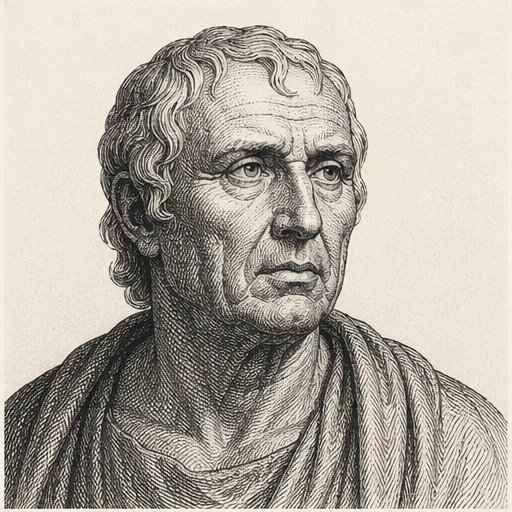
Seneca · 4 BC–65 AD
Eroding Mode
Seneca
The Pragmatic Compromise
4 BC–65 AD
Stoic Philosopher, Advisor to Emperor Nero
I trade pieces to hold the whole together.
Historical Context
The court of Nero. The impossible choice between complicity and death.
The Honest Ledger
Seneca was a Stoic philosopher who spent thirty years making un-Stoic compromises. As advisor to emperors and tutor to Nero, he held one of the most powerful positions in Rome. He also spent those years accumulating wealth, writing speeches defending acts he found indefensible, and compromising principles he had written about defending.
He knew what he was doing. Unlike leaders who rationalize their way into complicity, Seneca kept an honest ledger. He wrote about the problem. He documented his own hypocrisy. He could have retired, abandoned the court, claimed moral purity. Instead, he stayed — trading pieces to hold what he could, acknowledging the cost of every trade.
Seneca tutored Nero not because he believed Nero was good, but because he thought he could moderate Nero's worst impulses. He wrote speeches defending indefensible policies because he believed the alternative was worse. He accumulated wealth while preaching detachment because he understood that refusing material comfort would cost him influence he needed for other work. He kept asking: is this trade worth the cost? Sometimes he concluded it was. Sometimes he didn't, and he did it anyway.
In 65 AD, Nero ordered his death. Seneca died with characteristic composure, opening his veins and dictating philosophy to his students. His life was not a triumph. It was a study in what compromise actually costs — and why the ledger must be kept honestly. He never pretended to be pure. He only asked himself: am I being honest about the price?
The Shadow: Rationalization
The eroding mode justifies each trade as necessary, until the ledger is so compromised that the original principle is unrecognizable. Seneca knew he was rationalizing. Most leaders in this mode do not.
Discover Your Own Mode
Which of the five modes defines how you lead under pressure?
Explore Your Honor ModeThis profile is the framework this principle comes from is laid out in Honor Under Pressure, the first book in The Fourth Turning Leader series.
The Modern Principle
“Not every leader can hold an absolute line.”
Sometimes the work requires operating inside systems you cannot fully control, making trades you cannot fully justify. The question is not whether you compromise — it is whether you acknowledge them honestly and know when you have traded past the point of recovery. The Eroding leader keeps an honest ledger. The rationalizing leader keeps two.
Seneca · Eroding
Related Leaders
Other modes from Honor Under Pressure worth reading alongside this one.
Growing
Abraham Lincoln
Lincoln grew into moral clarity under pressure; Seneca documented his moral erosion under the same pressure. Reading them together is a study in what crisis reveals about character.
Holding
Cato the Younger
Cato and Seneca were both Stoics operating under institutional collapse. Their divergent choices — absolute refusal versus pragmatic compromise — define the poles of the honor code.
Subscribe & Get a Free Sample Chapter
Join leaders navigating the Fourth Turning. Free sample from the Field Guide.