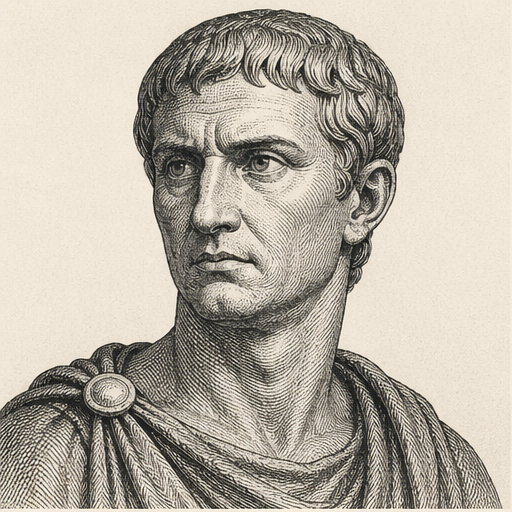
Cato the Younger · 95–46 BC
Holding Mode
Cato the Younger
The Immovable Line
95–46 BC
Roman Senator and Stoic Philosopher
I hold the line when others retreat.
Historical Context
The collapse of the Roman Republic. Caesar's rise. The death of constitutional government.
The Power of the Line
Cato the Younger was born into privilege but raised on principle. The Republic was failing, and every senator of consequence found a reason to compromise with Caesar. Not Cato. For forty years he stood in the Senate, alone, using procedure and rhetoric to delay the inevitable collapse. He delayed it so long that people forgot it was inevitable.
What made Cato's stand legendary was not its success — the Republic fell anyway — but its clarity. Everyone knew where his line was. Not because he announced it in moments of crisis, but because he had announced it in advance, through forty years of consistent choice. He refused every compromise that crossed his principle, whether the price was wealth, power, or friendship.
When Caesar finally won the civil war and offered Cato a pardon, Cato refused. He opened his veins and died reading philosophy, not from despair, but from principle. The man who followed him into battle found Cato dead and wept. Caesar himself said Cato was "great and noble" — the highest praise the man who conquered him could give.
For two thousand years, Cato's name meant one thing: the man who held the line. Not because he won. But because he decided in advance what he would not trade, and then he didn't trade it.
The Shadow: Rigidity
The inability to distinguish between principle and preference — between what the code demands and what the ego protects. The Holding leader's shadow is the refusal to update even when the principle itself demands it.
Discover Your Own Mode
Which of the five modes defines how you lead under pressure?
Explore Your Honor ModeThis profile is explored in full in Honor Under Pressure, the first book in The Fourth Turning Leader series.
The Modern Principle
“In a world of endless negotiation and pragmatic compromise, clarity about your non-negotiables is power.”
The leader who holds the line does not do so because they are certain they are right. They do so because they have decided in advance what they will not trade. That predictability, that consistency, becomes the foundation of integrity.
Cato the Younger · Holding
Related Leaders
Other modes from Honor Under Pressure worth reading alongside this one.
Restraining
George Washington
Washington faced the same temptation Cato did — consolidate power or release it. Where Cato held through refusal, Washington held through restraint. The contrast clarifies what holding the line actually requires.
Eroding
Seneca
Seneca chose compromise where Cato chose death. Reading them together is the most direct way to understand what the Holding mode costs — and why not everyone can pay it.
Subscribe & Get a Free Sample Chapter
Join leaders navigating the Fourth Turning. Free sample from the Field Guide.