Framework / Embedding Mode
The Embedding Mode.
The Institutional Architect
The Embedding leader measures success by what survives their departure. Marshall understood that personal honor is necessary but insufficient, that the leader's highest work is to build structures that carry the principle forward without requiring the leader's continued presence. The test is always: what happens when I leave?
Historical anchor: George Marshall, 1880–1959
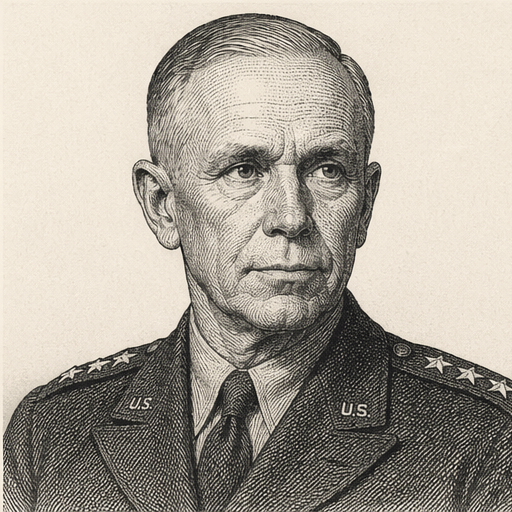
"Marshall's genius was not tactical. It was architectural. He built systems that would carry honor forward when he was gone."
What is the Embedding mode?
The Embedding mode is the leadership discipline of measuring success by what survives your departure. Anchored in George C. Marshall's design of the institutions that carried the postwar order (the Marshall Plan, the modern joint command, the State Department he rebuilt), it treats the leader's highest work as architectural rather than personal. Its shadow risk is embedding the wrong thing: durable systems built on flawed assumptions.
When the Embedding mode is called for
The Embedding mode is called for when the leader's highest contribution is not action but architecture. When the moment requires building something that will work when you are gone, when staying focused on the immediate and tactical would produce a lesser result than stepping back to design the systemic. When you are the person who sees the institutional logic others are missing.
What the Embedding mode sees clearly
The Embedding leader sees what must outlast them. They see the institution or person who will carry the code forward, and they organize their effort around making that transmission possible. They measure success not by what they accomplish but by what continues operating with integrity after they leave.
What the Embedding mode may miss
The Embedding leader can miss the moment that requires direct action, getting so focused on the architectural that they miss the tactical. They can also embed the wrong thing: build durable systems around flawed assumptions, creating structures that prove harder to dismantle than the leader ever intended.
Shadow risk: Bureaucracy and ossification
Bureaucracy and ossification are systems that faithfully preserve a method after the purpose has disappeared. The embedding mode is only as good as what it embeds, and a system that outlasts you can outlast your wisdom, hardening into durable structures built around flawed assumptions that prove harder to dismantle than the leader ever intended.
Historical anchor: George Marshall
George Marshall never commanded troops in battle. He built the systems that made victory possible and the institutions that made peace durable. As Army Chief of Staff, he constructed the military capacity that defeated Germany and Japan. As Secretary of State, he designed the Marshall Plan, the economic architecture that rebuilt Europe and prevented the spread of communism. As Secretary of Defense, he organized the response to Korea. In each role, Marshall's instinct was the same: build something that will work when I am gone. He refused the supreme command in Europe (he gave it to Eisenhower) because he believed his work was architectural, not tactical. He was right.
Embedding Mode is one of five behaviors named in the Five Modes framework, each anchored in a leader who carried the corresponding load under crisis. The mode is meant to be paired with a working honor code for leaders, so the strength does not collapse into its shadow under pressure.
Leadership diagnostic
Ask yourself: What am I building that will still be operating with integrity after I am gone? Are the people around me being developed to carry the principle forward, or to execute my preferences? What would happen to this organization if I left tomorrow?
From Analysis to Practice
Work with your Embedding mode in the Leader Lab.
The Leader Lab takes the framework from reading to practice. Start with the Five Modes leadership assessment to confirm your dominant mode, then build the code components that correspond to it. Teams can do the same work together through For Organizations.